
Loading...
Serving La Mirada, CA and surrounding areas. (562) 245-5933
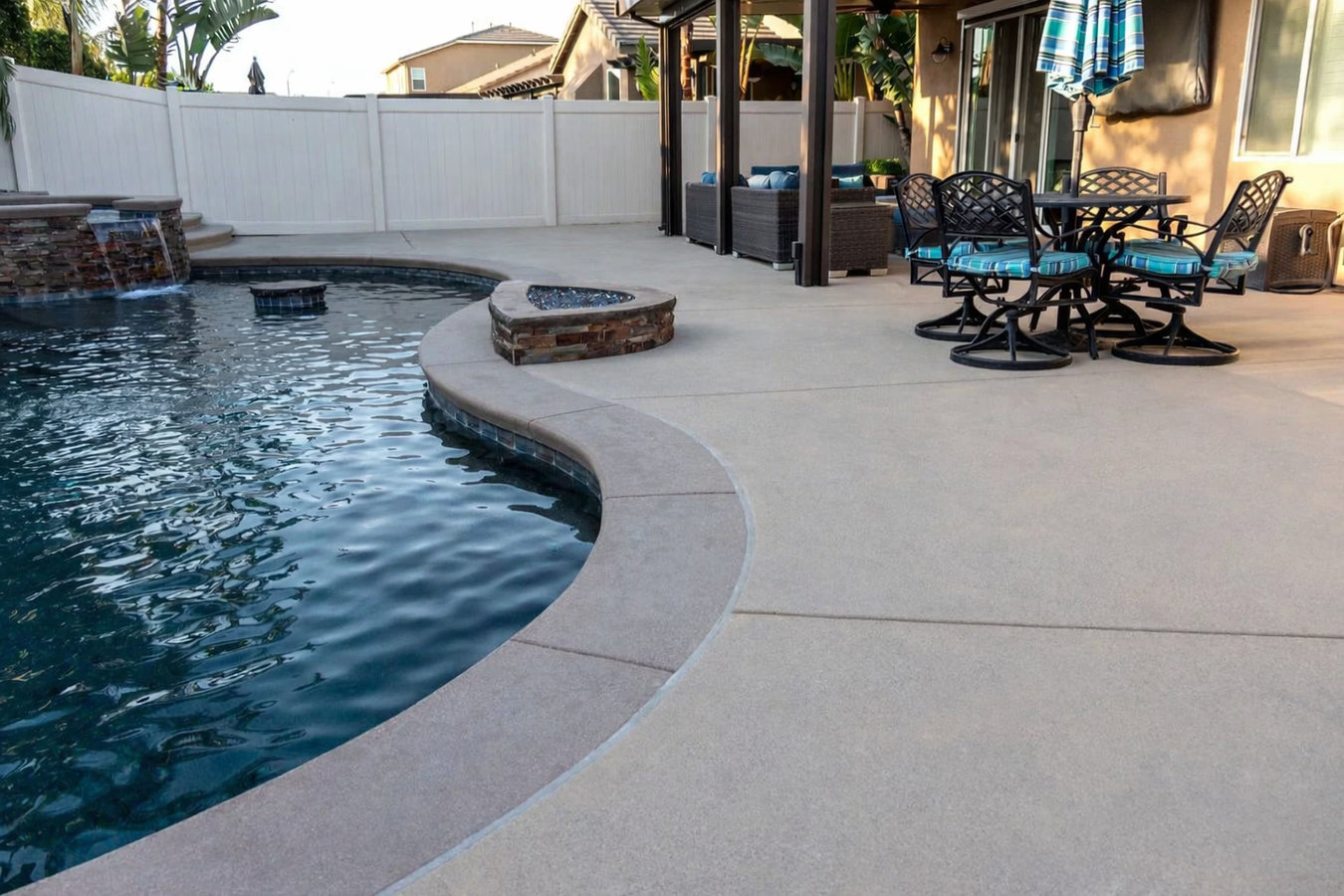
La Mirada Concrete serves Lakewood, CA with pool deck construction, driveway replacement, patio builds, and foundation work. We have worked on the 1950s homes that fill Lakewood from end to end, and we pull all required city permits before starting any job.
Lakewood's warm climate means pool decks get heavy use for most of the year, and older decks around pools put in during the 1960s and 1970s are cracked, uneven, and often a tripping hazard. A new textured concrete deck, sloped correctly to drain away from the water, makes the area safer and better looking. Learn more about our concrete pool deck service.
Most Lakewood driveways were poured when the homes were built in the early 1950s and are now over 70 years old. Tree roots from the mature street trees planted in that same era have pushed up sections, and clay soil movement has done the rest. A full replacement with proper base prep gives you a driveway that handles the conditions common on Lakewood lots.
Lakewood's long, dry summers make backyard patios one of the most used parts of the property. Original patio slabs from the 1950s construction era crack and settle the same way driveways do. A new pour - properly jointed and sloped - gives you a level outdoor space that holds up through summer heat, Santa Ana wind seasons, and wet winters.
Many Lakewood properties have planters, raised yards, or grade changes between lots that require retaining walls to hold soil in place. Walls built in the 1950s often lack adequate footings or drainage relief, causing them to tilt or crack under the pressure of wet clay soil. Concrete walls built with proper footings handle that load without failing.
Room additions, detached garages, and accessory dwelling units in Lakewood all need a code-compliant concrete slab foundation before framing starts. The clay soil conditions here require proper compaction and vapor barriers before the pour. Getting the slab right avoids structural problems down the road on any new construction added to a Lakewood property.
Tree roots are the main reason Lakewood sidewalk panels heave and crack - the same mature trees that make the streets look great also push up concrete over time. Broken sidewalk panels are a liability and a tripping hazard. Replacement panels are cut out, the root source is addressed, and new concrete is poured flush and properly sloped.
Lakewood was developed almost entirely between 1950 and 1954 - one of the largest planned housing tracts ever built in the United States. Nearly 17,500 homes went up in just a few years, nearly all of them single-story ranch-style houses on modest 5,000 to 6,000 square foot lots. That means most of the concrete on Lakewood properties - driveways, patios, walkways, and pool surrounds - was poured during the same short window and is now over 70 years old. Concrete at that age shows its age: cracking, settling, surface spalling, and drainage problems that did not exist when the slabs were new.
Two forces speed up the deterioration on Lakewood properties specifically. First, the clay-heavy soil common throughout the Los Angeles Basin expands and contracts with the wet and dry seasons, creating movement under slabs that causes cracking from below. Second, the mature trees planted along Lakewood streets when the city was built in the 1950s now have root systems large enough to push up driveway sections and sidewalk panels. Any contractor working on Lakewood concrete needs to account for both - the soil prep and root management are not optional steps.
Our crew works throughout Lakewood regularly, and we understand the concrete conditions that are specific to this city. The uniform construction era means we see the same patterns street to street: original driveways heaved by roots, patio slabs cracked along control joints that were too far apart, and pool decks around 1960s-era pools that have never been replaced. We pull permits through the City of Lakewood Public Works Department and know the inspection process for each type of project.
Lakewood is a fully built-out city bordered by Long Beach to the south and west, Bellflower to the northeast, and Cerritos to the east. Del Amo Boulevard and South Street run east-west across the city, and Lakewood Boulevard is the main north-south corridor connecting residents to Long Beach and the surrounding cities. Lakewood Center - one of the first large regional shopping malls in the country when it opened in 1952 - anchors the commercial center of the city and is a reference point most residents know well.
We also serve Downey, which sits just northeast of Lakewood along the I-105 and I-710 corridors, where we handle similar postwar residential concrete work. For homeowners on the eastern edge of Lakewood closer to the Orange County line, our service extends into Cerritos as well.
Reach out by phone or through our contact form and we respond within 1 business day to schedule a free on-site visit. No fee, no commitment to proceed.
We come to your Lakewood property, measure the work area, check for root damage and soil conditions, and answer your questions. You get a written, itemized estimate before any decision is required.
Once you approve the estimate, we pull all required permits from the City of Lakewood Public Works Department. No work starts until permits are in hand - this protects you and keeps the project legally on record.
Our crew handles demolition, base prep, forming, pouring, and finishing. For permitted work, we schedule and manage the city inspection. A final walkthrough confirms the project meets your expectations before we leave.
We serve Lakewood homeowners with free on-site estimates, all permits handled, and a written quote before any commitment. Call or fill out the form and we respond within 1 business day.
(562) 245-5933Lakewood is a city of about 80,000 residents in Los Angeles County, incorporated in 1954 just as the massive housing development that created it was finishing up. Almost all of the city's roughly 17,500 homes were built between 1950 and 1954 in what became one of the most famous examples of postwar planned housing development in the country. The result is a remarkably uniform housing stock - mostly single-story ranch-style homes on modest lots - with a character that is distinctly Lakewood. The city has its own government, parks system, and identity separate from the neighboring city of Long Beach, even though the two share a border and can look similar from the street. Lakewood Park, near the center of the city, has been the main gathering place for residents since the city was new, and Lakewood Center remains one of the earliest large regional shopping malls still in operation in the United States.
The housing stock here is predominantly single-family owner-occupied homes, which means most concrete work is driven by homeowners protecting an investment that has grown significantly in value over the decades. The city borders Long Beach to the south and west, and shares its northern and eastern edges with Cerritos and Bellflower. To the north and east, the communities of Norwalk and Downey sit just beyond the city limits, all sharing the same postwar residential character and similar concrete maintenance needs.
Get a durable, clean concrete driveway that adds lasting curb appeal.
Learn MoreTransform your backyard with a smooth, long-lasting concrete patio.
Learn MoreAdd style to any surface with beautifully patterned stamped concrete.
Learn MoreSturdy retaining walls that control erosion and define your landscape.
Learn MoreReliable slab foundations poured to support your structure confidently.
Learn MoreCommercial-grade parking lots built for heavy traffic and durability.
Learn MoreLakewood's 1950s homes need concrete contractors who know what 70-year-old flatwork looks like - call us now and we will respond within 1 business day with a free on-site assessment.